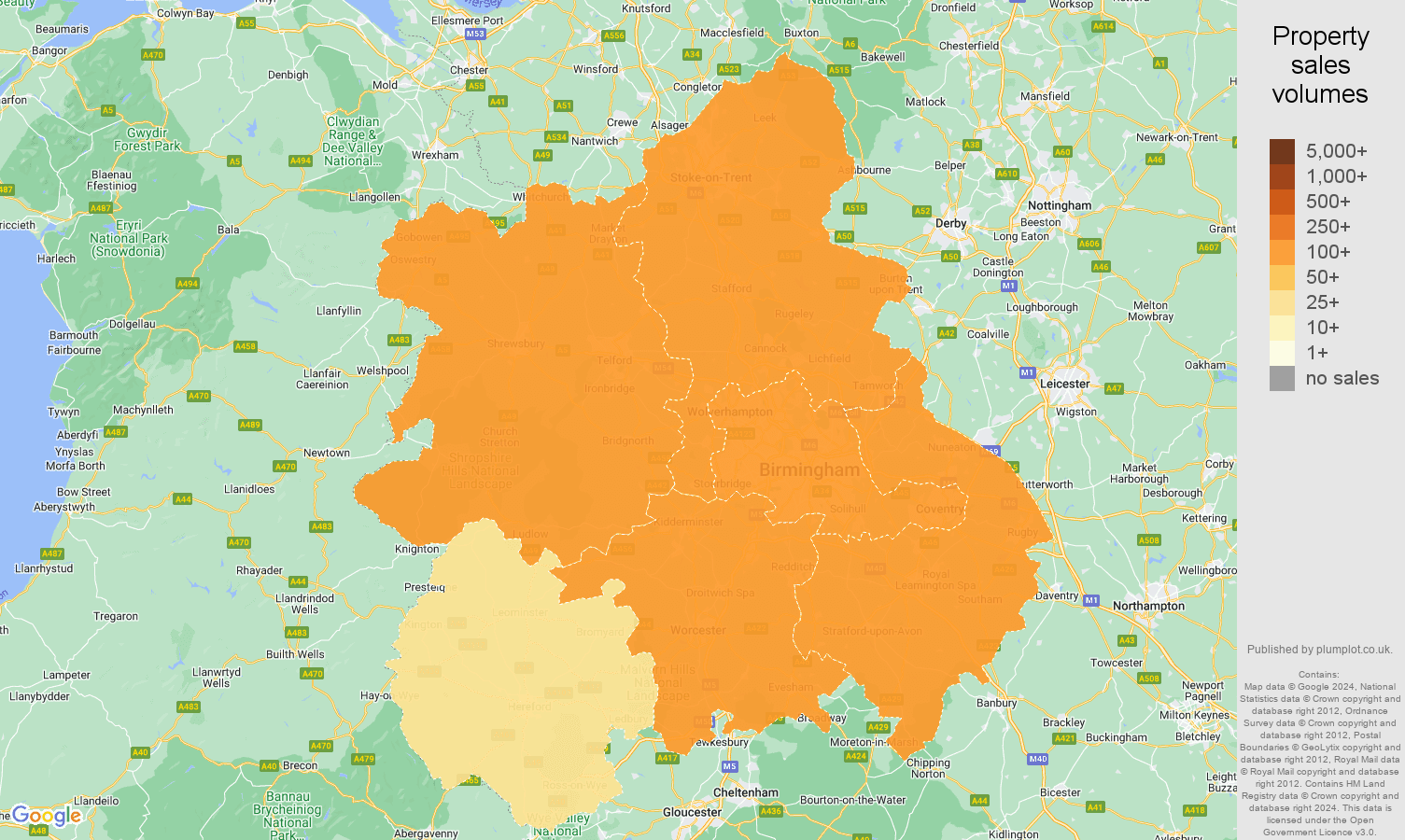
The West Midlands property market remains one of the most dynamic and resilient regions in the UK, and recent insights from Property Rescue shed new light on key trends shaping everything from house prices to rental demand. In this analysis, we’ll break down what these findings mean for homeowners, investors, and tenants across Birmingham, Coventry, Wolverhampton, and the wider region, connecting the data to real-world opportunities and considerations for anyone navigating the local property landscape.
At Kunda House, we stay closely aligned with the latest market intelligence to ensure our community has the information they need to make confident decisions. Whether you’re exploring a short stay in Birmingham, considering a long-term rental investment, or tracking price movements for your next home purchase, understanding the trends highlighted in this analysis will help you stay ahead of the curve.
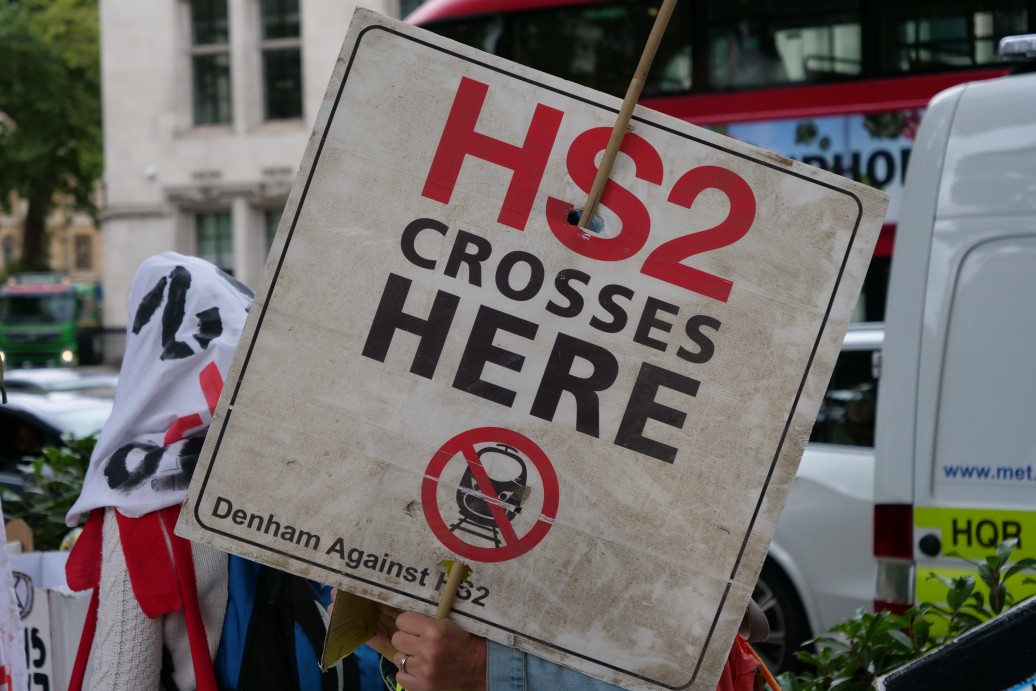
Home » Blog » Property News » The Impact Of HS2 On The Property Market: A Detailed Look HS2 has been one of the most contentious infrastructure debates in modern British history.
From the moment it was announced, questions swirled about cost, disruption, and whether it would ever actually be built.
Well, after years of uncertainty and a major scaling back in October 2023, we now have clarity: HS2 will connect London to Birmingham.
The northern extensions to Manchester and Leeds?
Cancelled.
For property owners and prospective buyers, this creates an interesting situation.
Half the original route is being built, the other half abandoned.
What does this actually mean for house prices along the corridor?
Having been in the property market for over 20 years, I’ve watched infrastructure projects come and go, and I’ve seen first-hand how transport links affect property values.
So let’s take a detailed look at what HS2 (both what’s being built and what’s been cancelled) means for the property market in 2026.
This is the only part of HS2 that’s definitely being built.
The route runs from London to Birmingham, with stations at: The line also extends to Handsacre Junction in Staffordshire, where HS2 trains will join the West Coast Main Line for destinations further north.
As of March 2026, all tunnelling between Old Oak Common and Birmingham is complete.
The excavation of the tunnels to Euston began in January 2026.
However, as of March 2026, HS2 remains under a programme reset.
The government has confirmed that the previous 2029-2033 opening range is no longer achievable, and a new official delivery baseline is being prepared for publication in 2026.
In October 2023, Prime Minister Rishi Sunak announced that the HS2 extensions beyond Birmingham to Manchester and Leeds were cancelled.
The £36 billion saved is being redirected into “Network North”: a programme of regional transport improvements including better local rail connections, road upgrades, and enhanced bus networks.
For property speculation, this matters enormously.
Anyone who bought property in anticipation of HS2 stations in Manchester or Leeds has seen those plans evaporate.
If your property is within half a kilometre of the HS2 construction route, you’ve likely experienced, or will experience, a temporary drop in value.
The reasons are straightforward: We saw exactly this pattern with HS1 (the high-speed line from London to the Channel Tunnel).
Property prices near the route sank dramatically as building work began.
But here’s the important part: once construction finished, prices recovered.
The negative impact was real but temporary.
That said, properties directly adjacent to the line, where you can see and hear trains passing, may continue to suffer from lower values even after completion.
It’s one thing to be near a station (good).
It’s another to have high-speed trains screaming past your back garden (not good).
For homeowners whose properties were compulsorily purchased or significantly devalued by the HS2 route, there are compensation schemes available.
Depending on your proximity to the HS2 route, you may be eligible for: Important: Since the cancellation of Phase 2, safeguarding has been lifted in stages.
Most Phase 2a safeguarding was removed on 18 January 2024 (except around Handsacre); the former Phase 2b Eastern Leg (West Midlands to Leeds) safeguarding was lifted in July 2025; and safeguarding on the former Phase 2b Western Leg (Crewe to Manchester) remains in place pending further decisions.
Property owners in areas where safeguarding has been removed are generally no longer eligible for HS2 property schemes, though the Need to Sell scheme may still be available in some circumstances.
Now the good news, particularly if you own property in Birmingham or along the Phase 1 corridor.
The impact of HS2 on Birmingham has been substantial, and unlike the cancelled northern sections, this is actually happening.
Once HS2 is fully operational, Birmingham Curzon Street to London will take about 49 minutes.
That’s faster than many people’s current commute within London itself.
This fundamentally changes Birmingham’s relationship with the capital.
It becomes feasible to live in Birmingham and work in London.
With property prices in Birmingham significantly cheaper than London, this creates obvious appeal for people priced out of the capital.
The data shows Birmingham is already benefiting from HS2: Market Context: UK house prices have recovered from 2023 lows, with December 2025 showing 2.4% year-on-year growth nationally.
The 3-5% Birmingham forecast significantly outpaces this average.
While official HM Land Registry data shows Birmingham city recorded modest 0.1% growth in December 2025, this masks the concentrated growth in HS2-adjacent areas like Digbeth and Eastside, where the HS2 effect is already visible in localised price movements.
This isn’t speculation.
Birmingham’s property market has strengthened specifically in areas close to the planned HS2 infrastructure, and the trend is accelerating as opening day approaches.
HS2 isn’t just about faster trains.
It’s spurring massive commercial development in Birmingham.
The area around Curzon Street is seeing significant investment: Commercial Property Boom: October 2024 recorded the highest UK non-residential property transaction volumes since 2005, with Birmingham’s HS2-adjacent commercial districts seeing particularly strong investor interest.
Corporate Britain is taking notice too.
While HSBC’s move of 1,000 staff from London to Birmingham was completed back in 2019, it’s part of a broader trend of businesses establishing or expanding their presence in the city.
We don’t need to guess about whether transport improvements boost property prices.
We have decades of evidence.
When Crossrail was announced in 2009, savvy investors bought property near planned stations.
At the time, it seemed like a gamble; the line wasn’t expected to open for over a decade.
But in the eight years following the announcement, property prices within a mile of Crossrail stations rose by 66% on average.
In Abbey Wood, the increase was 71%.
The Elizabeth Line finally opened in 2022, and the value increases have continued.
Research from the University of Leeds found that Metrolink extensions increased property prices near new stations by 6.3% on average.
The South Manchester Line saw 10.5% increases, and the Airport Line saw 20.9% increases.
Transport infrastructure affects property values through three mechanisms: Most value increase happens as infrastructure nears completion and immediately after opening.
The anticipation builds in, then the reality delivers.
When the northern legs were cancelled in October 2023, many assumed property prices in Manchester and Leeds would collapse.
After all, years of speculation about HS2 connectivity had been priced into the market.
Manchester’s property market has remained robust.
By December 2025, Manchester house prices had risen 5.7% year-on-year, demonstrating continued strength despite the HS2 cancellation.
The reason?
Manchester doesn’t need HS2 to drive growth.
The city has its own economic momentum, its own transport improvements (including Metrolink expansions), and its own appeal to businesses and residents.
Leeds has similarly remained stable.
The HS2 cancellation removed speculative gains that had been priced in, but the fundamental strength of the Yorkshire property market persisted.
The lesson here is important: transport infrastructure can boost property values, but it’s not the only factor.
Cities with strong economies, good universities, and quality of life will see property growth regardless.
The £36 billion saved from cancelling the northern HS2 legs is being reinvested through Network North, which includes: Whether this delivers better value than HS2 would have done is a political debate.
But for property owners, the message is clear: the money is being redirected into regional transport improvements, not abandoned entirely.
These projects may deliver benefits faster than HS2 would have.
They’re less ambitious but also less complex.
Local rail improvements and better regional connectivity could still boost property values, just not in the concentrated, dramatic way that HS2 stations would have.
So here’s the practical question: if you’re considering buying or selling property near the HS2 route, what should you do?
The evidence suggests this is a sound investment, particularly: Be aware that areas right next to the track (but not near stations) may remain less desirable.
Proximity to a station is valuable; having trains thunder past your window is not.
You have options.
If you’re in the safeguarding zone, investigate compensation schemes.
If you are outside the safeguarding zone but have a compelling reason to sell (such as relocating for work or ill health) and cannot find a buyer due to HS2, you may be eligible for the government’s Need to Sell (NTS) scheme, which purchases properties at their unblighted market value.
If you’re experiencing disruption but not in the safeguarding zone and don’t meet the NTS criteria, you might want to wait until construction is complete for values to recover.
Based on the HS1 precedent, temporary dips during construction are followed by recovery.
If you need to sell quickly and don’t want to wait out the construction period, Property Rescue can buy your property for cash, even if it’s in an HS2-affected area.
We’ve been buying property in challenging situations for over 20 years, and we’ve purchased 500+ properties in the last three years alone.
Because of our Sale and Rent Back service, we’re one of the only house buying companies in the UK that’s regulated by the FCA.
We can typically make an offer within hours and complete in as little as 2-4 weeks.
Typical Timeline: Standard property transactions in England and Wales take an average of 120-154 days from offer to completion.
With a cash buyer like Property Rescue, you could complete in as little as 2-4 weeks, helping you move on from HS2 disruption much faster.
The HS2 dream is over for these cities, but that doesn’t mean property investment is off the table.
Both cities have strong fundamentals and alternative transport improvements coming through Network North.
Buy based on the cities’ intrinsic strengths, not on transport speculation.
Despite the drama, the U-turns, and the scaled-back ambitions, HS2 Phase 1 is happening.
All the tunnelling between Old Oak Common and Birmingham is complete, construction is advancing, and opening is now expected in the mid-to-late 2030s following the programme reset.
For Birmingham, this is transformational.
For London (particularly Old Oak Common in West London), it’s a significant connectivity boost.
For the areas in between, it’s a mixed picture depending on proximity to stations versus proximity to the track itself.
The pattern from HS1, Crossrail, and other major transport projects is clear: short-term disruption, long-term value increase.
Property markets are forward-looking.
They price in infrastructure long before it opens.
Birmingham property owners are already seeing the benefit.
By the time the first trains run, much of the value increase will have already happened.
For Manchester and Leeds, the cancellation of HS2 was a disappointment, but not a disaster.
These cities will continue to grow based on their own economic strengths and the regional transport improvements coming through Network North.
The story of HS2 and property prices isn’t over.
It’s just taking a different path than originally planned.
Receive a free, no-obligation cash offer by completing our 30 second form Just a few more questions...
Remember, your data is safe with us and we are ICO registered.
We take your privacy seriously and will only use your personal data to provide the service you have requested.
By clicking "Get your offer" you are consenting to your personal data being used for that purpose.
We will contact you to discuss your no-obligation offer.
For more information, please see our privacy policy.
Our team is reviewing your property details and will be in touch within 24 hours with your no-obligation cash offer.
This website uses cookies so that we can provide you with the best user experience possible.
Cookie information is stored in your browser and performs functions such as recognising you when you return to our website and helping our team to understand which sections of the website you find most interesting and useful.
Strictly Necessary Cookie should be enabled at all times so that we can save your preferences for cookie settings.
This website uses Google Analytics to collect anonymous information such as the number of visitors to the site, and the most popular pages.
Keeping this cookie enabled helps us to improve our website.
Key Takeaways from This Analysis
- Birmingham-Only HS2 confirmed
- £3.2bn Arden Cross development
- Commercial property transaction boom
What This Means for the West Midlands
These findings reinforce the West Midlands’ position as a region of growing importance for UK property. Compared to London and the South East, where affordability remains a significant barrier for many, the West Midlands continues to offer better value while still delivering strong growth potential. Birmingham, in particular, benefits from ongoing regeneration projects, improved transport links, and a vibrant cultural scene that attracts young professionals, students, and families alike.
For investors, the combination of competitive entry prices and healthy rental yields makes the West Midlands an attractive choice. Meanwhile, first-time buyers and those looking to move up the ladder can find more space and better value compared to many other parts of the country. With major infrastructure projects continuing to shape the region, the long-term outlook remains positive for both homeowners and landlords.
How Kunda House Can Help
At Kunda House, we specialise in connecting people with quality accommodation across the West Midlands. Whether you’re looking for a flexible short stay, a comfortable long-term rental, or expert guidance on local property investment, our team is here to support you every step of the way. We combine local market expertise with a commitment to outstanding service, ensuring our residents, guests, and partners have the best possible experience.
Our properties are carefully selected and maintained to the highest standards, offering modern amenities and prime locations across Birmingham and the surrounding area. We also keep a close eye on market trends like those highlighted in this analysis, ensuring our offerings remain competitive and aligned with what our community needs.
Looking Ahead
As we move further into 2026, the West Midlands property market is expected to continue its steady evolution. While some fluctuations are inevitable, the underlying drivers of growth—including regeneration, infrastructure investment, and strong demand for quality rental accommodation—remain firmly in place. By staying informed and working with trusted local partners, you can navigate the market with confidence and make the most of the opportunities available.
If you’d like to learn more about the West Midlands property market, explore our available properties, or discuss your accommodation needs, don’t hesitate to get in touch with the Kunda House team today.