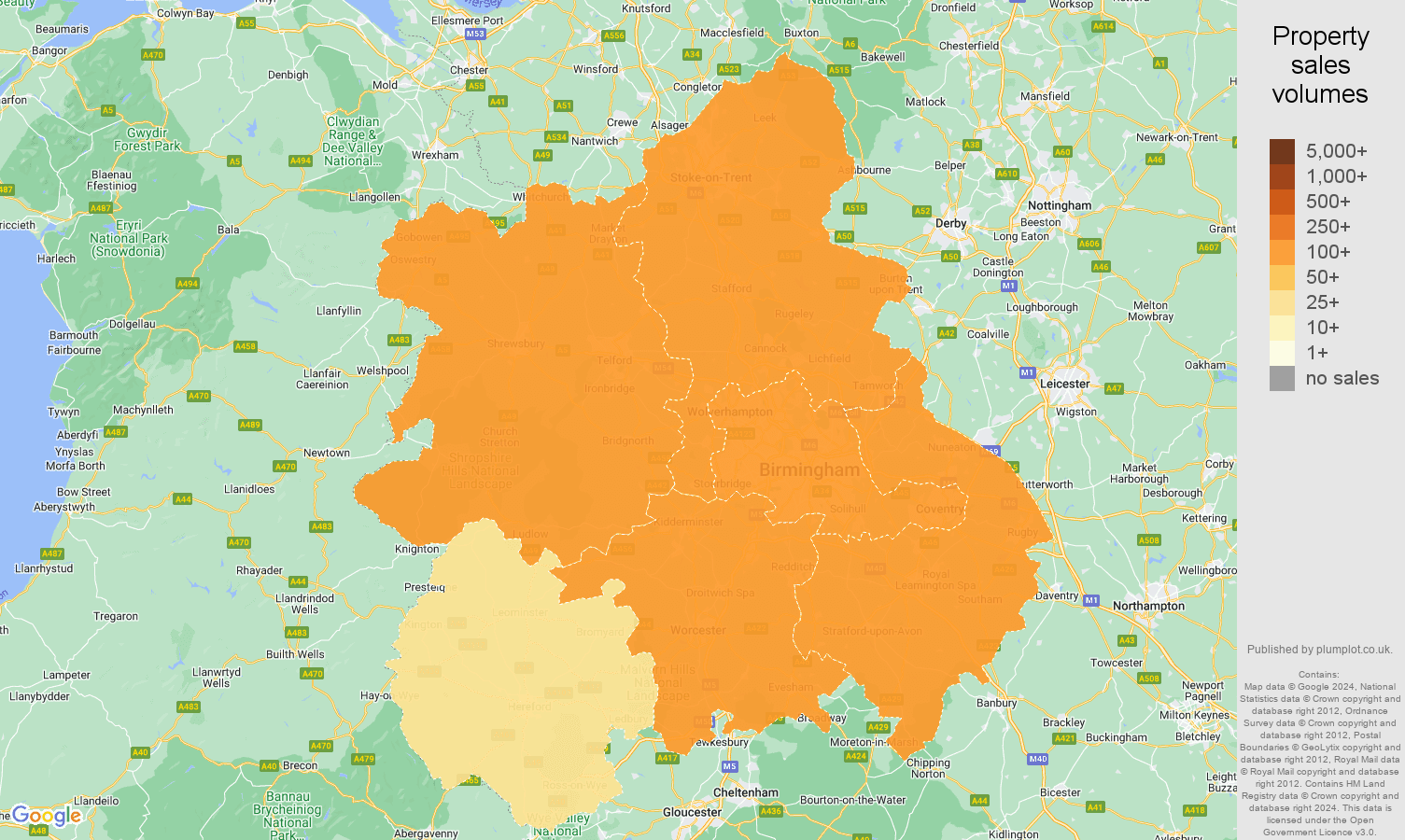
The West Midlands property market remains one of the most dynamic and resilient regions in the UK, and recent insights from The New Midlands shed new light on key trends shaping everything from house prices to rental demand. In this analysis, we’ll break down what these findings mean for homeowners, investors, and tenants across Birmingham, Coventry, Wolverhampton, and the wider region, connecting the data to real-world opportunities and considerations for anyone navigating the local property landscape.
At Kunda House, we stay closely aligned with the latest market intelligence to ensure our community has the information they need to make confident decisions. Whether you’re exploring a short stay in Birmingham, considering a long-term rental investment, or tracking price movements for your next home purchase, understanding the trends highlighted in this analysis will help you stay ahead of the curve.
The West Midlands has long been positioned as one of the principal beneficiaries of High Speed Two (HS2).
The promise was clear: in return for disruption and upheaval, the region would gain faster connections to London, increased rail capacity, regeneration around new stations, and a step change in its economic trajectory.
Yet ongoing speculation about when the Government will give parliamentary approval to the HS2 Reset is deepening a growing sense of drift.
For businesses, investors, and communities across the region, this is no longer a temporary frustration—it is becoming a structural risk.
From my conversations across the West Midlands, it is clear that businesses are now becoming restless.
The Government must provide certainty by approving the plan and giving much-needed clarity to residents and businesses alike.
The Government commissioned the James Stewart Review in October 2024 following a series of escalating issues with HS2, including rapidly rising costs, delays, and concerns about governance between the Department for Transport and HS2 Ltd.
The review examined oversight, decision-making, and accountability, reporting in 2025 that the programme had suffered from poor cost control, inadequate ministerial oversight, and unclear governance structures.
In response, the Transport Secretary announced in June 2025 that the Government would accept all of the review’s recommendations and use them to support a “reset” of the HS2 project.
This reset entails a fundamental restructuring of project delivery: establishing a new realistic cost and schedule baseline, potentially renegotiating contracts with suppliers, strengthening government oversight, and refocusing delivery on the London–Birmingham section.
HS2 CEO Mark Wild has led the Reset plan, and the ball is now in the Government’s court to formally approve it.
While the rationale for the Reset is understandable, the consequences for timelines and investor confidence are significant.
The original 2033 target for first trains between London and Birmingham is no longer achievable, with services now expected well into the mid-to-late 2030s.
Meanwhile, construction north of Birmingham has been postponed as priorities shift to completing the core line.
For the West Midlands, this is more than a timetable issue—it is a credibility issue.
HS2 is one of the UK’s largest infrastructure projects, and a major catalyst for growth.
Project Reset needs approval, and certainty must be restored to businesses, residents, and investors.
I recently attended a Spring Statement briefing hosted at one of our Reimagining the Region members, with the delegates broadly comprised of the West Midlands’ key developers and funders.
The frustration in the room was palpable.
Major infrastructure works shape investment cycles, and the region has spent more than a decade aligning regeneration strategies, commercial developments, and housing plans around HS2 delivery—particularly around Birmingham Curzon Street and the Interchange hub in Solihull.
Repeated delays force the private sector to recalibrate risk.
Developers phase projects more cautiously.
Institutional investors apply higher risk premiums.
Some schemes quietly stall.
If Parliament does not approve the Reset for another six months, strategic decisions will continue to be made in the dark, and investment may inevitably move elsewhere.
Digbeth and Interchange: regeneration in the balance Nowhere are these risks more visible than in Digbeth.
For over a decade, Digbeth has been positioned as one of the UK’s most significant urban regeneration opportunities, anchored by Curzon Street HS2 station.
Billions of pounds of planned development—from residential schemes to creative and commercial space—have been predicated on the arrival of high-speed rail.
Curzon Street would bring Digbeth significantly closer—economically and perceptually—to London’s commuter orbit, dramatically increasing the area’s attractiveness to investors and occupiers.
The risk is not that Digbeth stops regenerating—it is already changing—but that the pace and scale of transformation fall short of what was originally envisaged.
Momentum matters.
The area has been marketed nationally and internationally as Birmingham’s HS2 growth quarter.
If delivery confidence continues to wobble, the story becomes harder to sustain with global investors who have many competing city-centre opportunities.
The same dynamic applies to the planned Birmingham Interchange HS2 station in Solihull.
Interchange was conceived not merely as a parkway station but as the centrepiece of a major economic growth zone linked to the NEC, Birmingham Airport, and the wider UK Central Hub vision.
Here, the stakes are arguably even higher.
Connectivity-led development—logistics, advanced manufacturing, commercial space, and housing—depends on reliable high-speed services and clear delivery timelines.
Delays pose substantial risks to sequencing, funding, recruitment, and the supply chain for such a vast project.
The West Midlands’ growth model increasingly relies on connectivity.
The Midlands Rail Hub project will enhance regional links, but HS2 was expected to deliver three transformational benefits: Delays do more than postpone these benefits—they erode them.
The West Coast Main Line is already stretched beyond pre-pandemic levels, limiting the frequency and reliability improvements promised to businesses.
Infrastructure uncertainty is also a social issue.
Communities along the route have endured years of disruption, land safeguarding, and construction impacts—see Water Orton and Coleshill as examples.
Every time the project is re-scoped, the burden on local communities extends further beyond what was originally communicated.
While much depends on national decisions, the region is not powerless.
Mayor Richard Parker and other elected officials continue to champion HS2.
But uncertainty is the enemy of developers.
Major projects inevitably evolve, but prolonged strategic ambiguity is avoidable—and costly.
HS2 still has the potential to reshape the Midlands economy.
Construction is advancing in key sections, and the London–Birmingham route remains government policy.
I would strongly advise visiting the HS2 website to see how the project is progressing on a day to day basis.
The scale of the project is enormous and there is substantial work taking place each and every day.
But potential alone does not drive investment—certainty does.
Every additional period of silence compounds risk, slows private investment, and weakens confidence in long-term planning.
The West Midlands does not need perfection.
It needs clarity, consistency, and commitment.
The Government must now do one thing: approve the Reset, set a credible timetable, and stand behind it.
Until that happens, the greatest threat posed by HS2 will not be engineering complexity or cost escalation—but the corrosive effect of uncertainty on the region and its flagship developments, Digbeth and Interchange, which have already waited too long for the connectivity revolution they were promised.
This is a personal blog post.
Any opinions, findings, and conclusion or recommendations expressed in this article are those of the authors and do not necessarily reflect the view of the Centre for the New Midlands or any of our associated organisations/individuals.
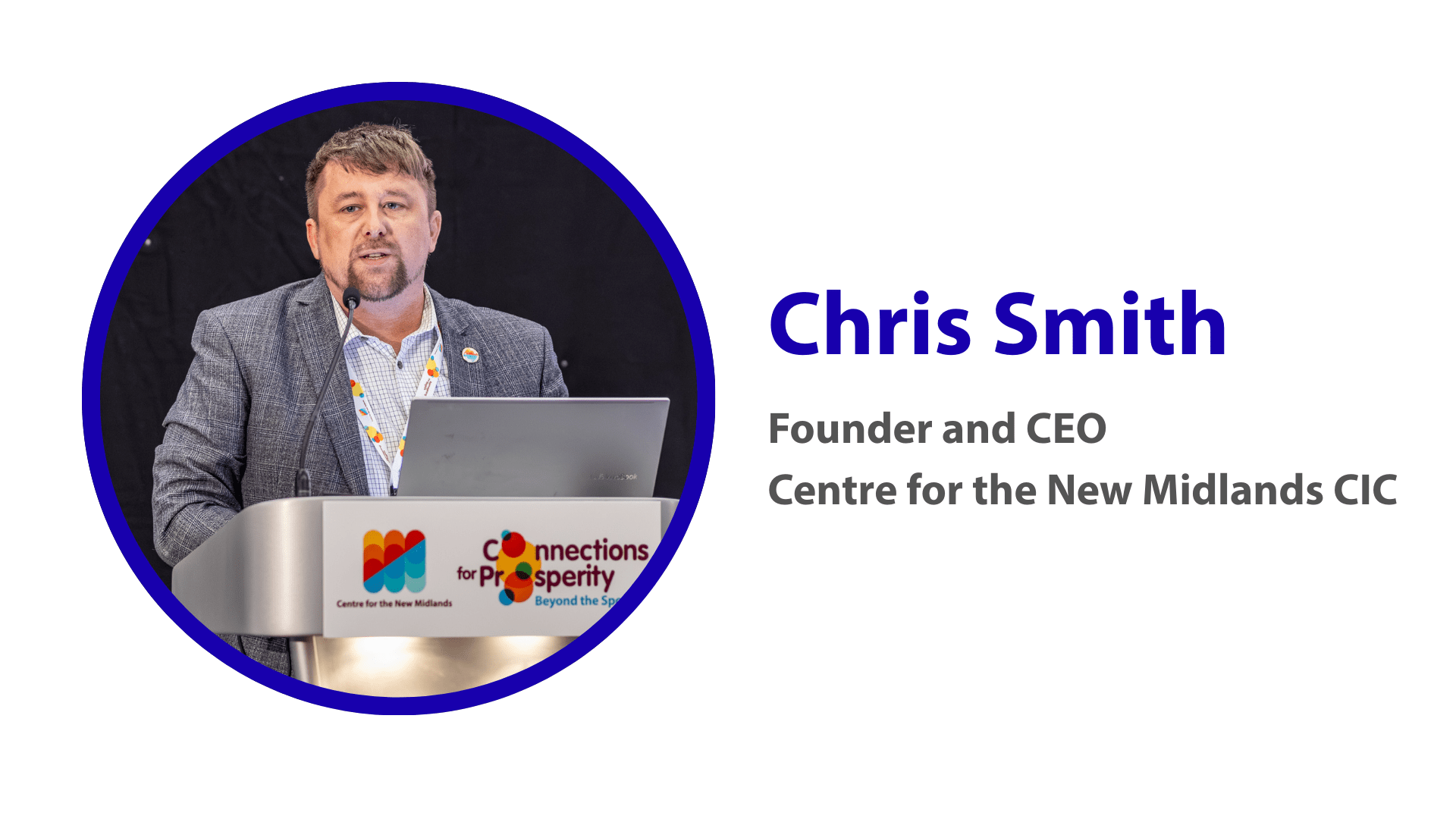
Chris is the Founder and CEO of the Centre for the New Midlands, launching the organisation in January 2020.
Prior to establishing the only independent, non-partisan think tank solely focussed on the West Midlands region, Chris worked for 15 years in the UK Higher Education sector, with extensive experience in stakeholder engagement; business development and major gift fundraising.
Chris has previously worked for the Saga Group plc and the Home Office, Immigration and Nationality Directorate.
Chris is a former Students’ Union President and has also been a Trustee of a Students’ Union.
Chris has served as a member of the NSPCC Business Board in Coventry and Warwickshire and is currently an Acorns Children’s Hospice Business Ambassador.
He is an avid Tottenham Hotspur supporter and a ‘Man of Kent’ by birth but an ‘adopted’ Coventrian having lived in the city since 2003.
Key Takeaways from This Analysis
- James Stewart Review accepted
- New delivery baseline being prepared
- Digbeth and Interchange regeneration at risk
What This Means for the West Midlands
These findings reinforce the West Midlands’ position as a region of growing importance for UK property. Compared to London and the South East, where affordability remains a significant barrier for many, the West Midlands continues to offer better value while still delivering strong growth potential. Birmingham, in particular, benefits from ongoing regeneration projects, improved transport links, and a vibrant cultural scene that attracts young professionals, students, and families alike.
For investors, the combination of competitive entry prices and healthy rental yields makes the West Midlands an attractive choice. Meanwhile, first-time buyers and those looking to move up the ladder can find more space and better value compared to many other parts of the country. With major infrastructure projects continuing to shape the region, the long-term outlook remains positive for both homeowners and landlords.
How Kunda House Can Help
At Kunda House, we specialise in connecting people with quality accommodation across the West Midlands. Whether you’re looking for a flexible short stay, a comfortable long-term rental, or expert guidance on local property investment, our team is here to support you every step of the way. We combine local market expertise with a commitment to outstanding service, ensuring our residents, guests, and partners have the best possible experience.
Our properties are carefully selected and maintained to the highest standards, offering modern amenities and prime locations across Birmingham and the surrounding area. We also keep a close eye on market trends like those highlighted in this analysis, ensuring our offerings remain competitive and aligned with what our community needs.
Looking Ahead
As we move further into 2026, the West Midlands property market is expected to continue its steady evolution. While some fluctuations are inevitable, the underlying drivers of growth—including regeneration, infrastructure investment, and strong demand for quality rental accommodation—remain firmly in place. By staying informed and working with trusted local partners, you can navigate the market with confidence and make the most of the opportunities available.
If you’d like to learn more about the West Midlands property market, explore our available properties, or discuss your accommodation needs, don’t hesitate to get in touch with the Kunda House team today.