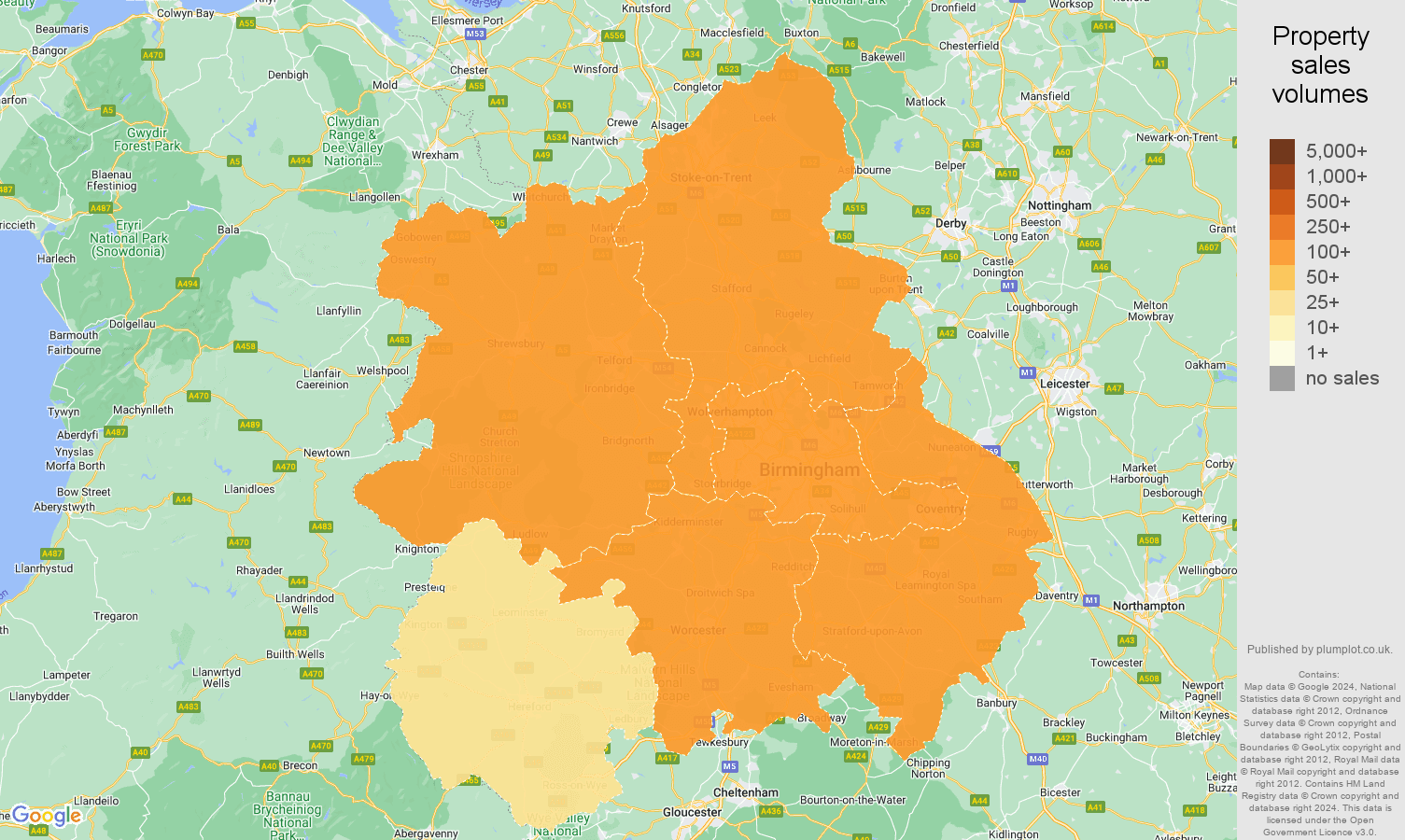
The West Midlands property market remains one of the most dynamic and resilient regions in the UK, and recent insights from Deloitte shed new light on key trends shaping everything from house prices to rental demand. In this analysis, we’ll break down what these findings mean for homeowners, investors, and tenants across Birmingham, Coventry, Wolverhampton, and the wider region, connecting the data to real-world opportunities and considerations for anyone navigating the local property landscape.
At Kunda House, we stay closely aligned with the latest market intelligence to ensure our community has the information they need to make confident decisions. Whether you’re exploring a short stay in Birmingham, considering a long-term rental investment, or tracking price movements for your next home purchase, understanding the trends highlighted in this analysis will help you stay ahead of the curve.
The City Heart remains the hub for residential and office development in Birmingham, while the City North, home to the Birmingham Innovation Quarter, is expected to see increased levels of educational development in coming years. 2024 was another record-breaking year for the residential sector in Birmingham.
A record 3,180 new homes were delivered across 17 schemes – 60% of which were build to rent (‘BTR’), whilst 25% were for owner occupiers and the remaining 15% of mixed tenancy types.
The two largest schemes were located in the City Heart, where 49% of all new homes were delivered in 2024. 504 BTR units were delivered over 19 stories at The Bath House.
Cortland’s The Square also delivered 440 BTR units across 36 stories on Broad Street.
For the third year running, the BTR sector leads housing market delivery in Birmingham.
Across the UK, the outlook is similar.
Scarcity of supply of homes is a feature of the rental market, and this is likely to increase with growing pressures to keep up with demand for the private rented sector (‘PRS’).
In 2024, 31% of PRS landlords in the UK reported that they plan to decrease the size of their portfolio.
Of those, 66% stated that tax and legislative changes were the reason, whilst 40% stated viability reasons, for example higher mortgage interest rates.
Within Birmingham, private rents rose to an average of £1,025 in October 2024, an annual increase of 9.4% from £937 in October 2023.
According to the Office for National Statistics, this was higher than the rise in the West Midlands (8.7%) over the year, whilst Birmingham rental increases have remained above national averages since April 20235, suggesting an acute constraint in supply in the PRS.
Couple low PRS landlord sentiment with an ongoing affordability crisis for first time home buyers, and the need for BTR will continue to be demonstrable in 2025.
Following last year’s record-breaking number of homes under construction, this year has seen a slight reduction despite the expanded survey boundary, with 7,743 new homes underway across 22 schemes within the survey boundary.
The split across tenancy types is broadly consistent with completions.
The majority of the residential pipeline is within The City Heart and Central South, each representing a third of the overall total figure.
In 2025, the BTR sector should continue to deliver, with a strong pipeline of c.10,000 BTR units with planning permission but yet to start on site across the city. 2024 saw the emerging co-living sector arrive in the city with planning permission granted for both Cordia and The James, the first of their type in Birmingham.
Cordia is seeking to deliver 54 units at Bradford Works in City West, whilst The James is seeking to deliver 150 units at a former university building, Richmond House, in the City Heart.
In 2025, we expect to see this sector gain momentum with a new start on site likely.
Both co-living and BTR respond to an acute market demand for high quality, convenient and connected accommodation that is well served by amenities and facilities, sought by young professionals working in the city.
They also offer a stepping stone into the residential sector for recently qualified graduates leaving PBSA for the first time.
The PBSA sector is also seeing growth in this year’s survey.
One scheme completed in 2024, delivering 208 student bedspaces, whilst the number of bedspaces under construction has risen to a new all-time high of 2,242.
The PBSA sector is responding to significant growth in student numbers and investment by the city’s universities into facilities and expansion.
The education and innovation sectors have seen a 139% increase in leasing activity over 2023 in Q1-Q3 of 2024 alone according to Savills, which raises questions over whether construction activity in this sector can keep pace.
Although University College Birmingham’s Engineering and Sustainable Construction Centre provided c.54,000 sq. ft. of new floorspace in 2024, there was no new activity in the education and innovation sector.
However, the pipeline is more promising.
Aston University’s acquisition of 10 Woodcock Street represents the university’s strategic expansion into the Birmingham Innovation Quarter.
Plans include the Aston Business Incubator, which will open its doors to innovative tech businesses in Birmingham and the surrounding region.
Birmingham City University will also bring forward new schemes in 2025.
In total, over 480,000 sq. ft. of education floorspace has planning approval but is yet to start on site.
All of this floorspace is set to be delivered in Central North and will reinforce the important role of Birmingham’s Innovation Quarter in education and innovation sectors.
Now supported by favourable funding and incentives through the West Midlands Investment Zone delivery plan, the Innovation Quarter has the potential to attract further inward investment leading to future construction activity and an economic boost for the city.
The provision of the right space to foster learning and promote skills acquisition is intrinsically linked to the performance of the economy, its ability to innovate and be productive.
The West Midlands currently takes a 7.7% share of graduates entering the job market, placing it 5th out of 13 UK regions.
Birmingham’s graduate retention rate has varied between a third and a half between 2018 and 2024, according to various data sources.
The retention rate may be further negatively impacted by UK Government announcements to create more restrictive conditions for graduate work visas14.
However, with further investment by both the public and private sector into the Innovation Quarter in 2025 and beyond, committing to the city may become a more attractive proposition to newly qualified graduates.
The city centre remains the economic heart of the city, and it is here that we are seeing the strongest pulse in the office sector.
There were two new office starts in 2024, which is consistent with the level seen every year since 2020.
In the last five years, office schemes have not returned to levels seen pre-pandemic.
Only 2023 stands out as an outlier and this is largely influenced by post-pandemic ways of working creating refurbishment trends.
Both new starts, 35 Newhall Street and the Tea Factory at Typhoo Wharf, are refurbishments and reinforce the increasing trend towards ‘renew not new’ within the office sector (see our Birmingham Crane Survey 2024).
In total, there are eight office schemes under construction, providing 814,574 sq. ft. of new (across three schemes) and refurbished (across five schemes) floorspace under construction.
Although represented by less schemes, new builds will deliver 63% of the total floorspace.
Salhia Investments’ mixed-use Beorma Tower leads the way, and will deliver 195,000 sq. ft., whilst Paradise Circus makes a significant contribution to the office floorspace under construction total once again, with Three Chamberlain Square bringing forward 189,000 sq. ft.
Four office-led schemes completed in 2024, delivering 310,424 sq. ft.
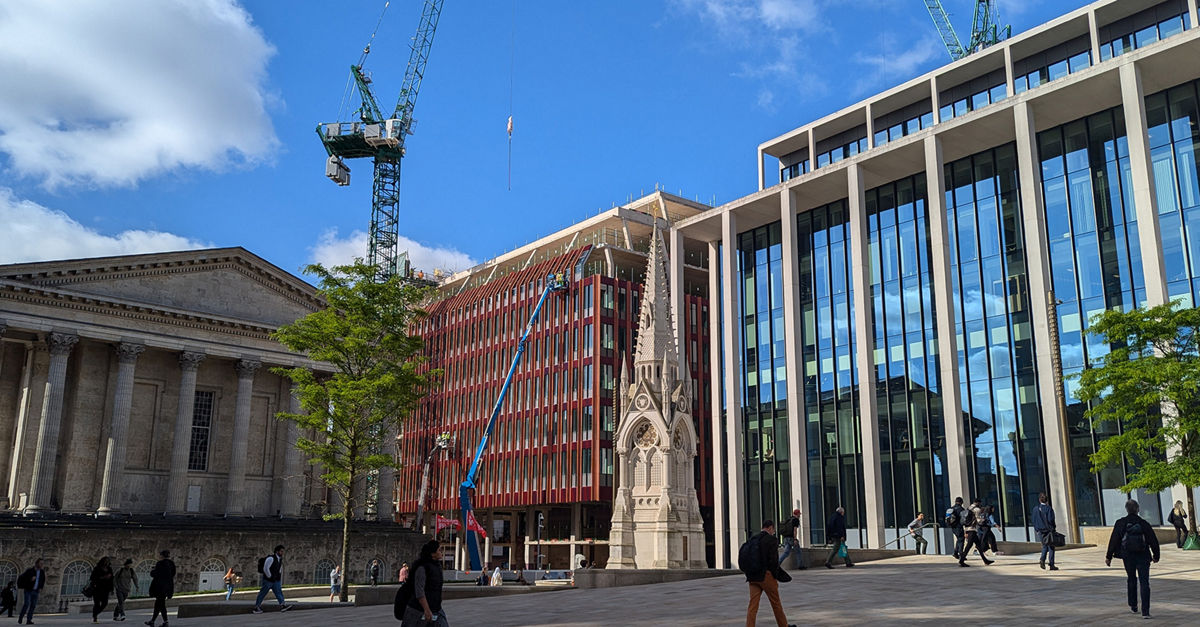
All four are located in the City Heart, and all four were also refurbishments – WOLO House, 5 St Phillips Place, 19 Cornwall Street and the Chatwin Building.
The rise in office refurbishments reflects the growing focus on quality to attract occupiers and headline rents.
Making office headlines in 2024, Bryt Energy agreed a deal with Bruntwood SciTech to relocate its UK HQ to the city and Aston University acquired 10 Woodcock Street from Birmingham City Council.
These deals form the backdrop underpinning a strong year for Birmingham’s commercial office market, in which there was an overall take-up of 843,218 sq. ft., representing a 23% increase from the five-year average.
To tell us what you think, please update your settings to accept analytics and performance cookies.
Key Takeaways from This Analysis
- 2024 saw 3,180 new homes delivered
- 60% build-to-rent
- Private rents £1,025 (Oct 2024) up 9.4% YoY
What This Means for the West Midlands
These findings reinforce the West Midlands’ position as a region of growing importance for UK property. Compared to London and the South East, where affordability remains a significant barrier for many, the West Midlands continues to offer better value while still delivering strong growth potential. Birmingham, in particular, benefits from ongoing regeneration projects, improved transport links, and a vibrant cultural scene that attracts young professionals, students, and families alike.
For investors, the combination of competitive entry prices and healthy rental yields makes the West Midlands an attractive choice. Meanwhile, first-time buyers and those looking to move up the ladder can find more space and better value compared to many other parts of the country. With major infrastructure projects continuing to shape the region, the long-term outlook remains positive for both homeowners and landlords.
How Kunda House Can Help
At Kunda House, we specialise in connecting people with quality accommodation across the West Midlands. Whether you’re looking for a flexible short stay, a comfortable long-term rental, or expert guidance on local property investment, our team is here to support you every step of the way. We combine local market expertise with a commitment to outstanding service, ensuring our residents, guests, and partners have the best possible experience.
Our properties are carefully selected and maintained to the highest standards, offering modern amenities and prime locations across Birmingham and the surrounding area. We also keep a close eye on market trends like those highlighted in this analysis, ensuring our offerings remain competitive and aligned with what our community needs.
Looking Ahead
As we move further into 2026, the West Midlands property market is expected to continue its steady evolution. While some fluctuations are inevitable, the underlying drivers of growth—including regeneration, infrastructure investment, and strong demand for quality rental accommodation—remain firmly in place. By staying informed and working with trusted local partners, you can navigate the market with confidence and make the most of the opportunities available.
If you’d like to learn more about the West Midlands property market, explore our available properties, or discuss your accommodation needs, don’t hesitate to get in touch with the Kunda House team today.